
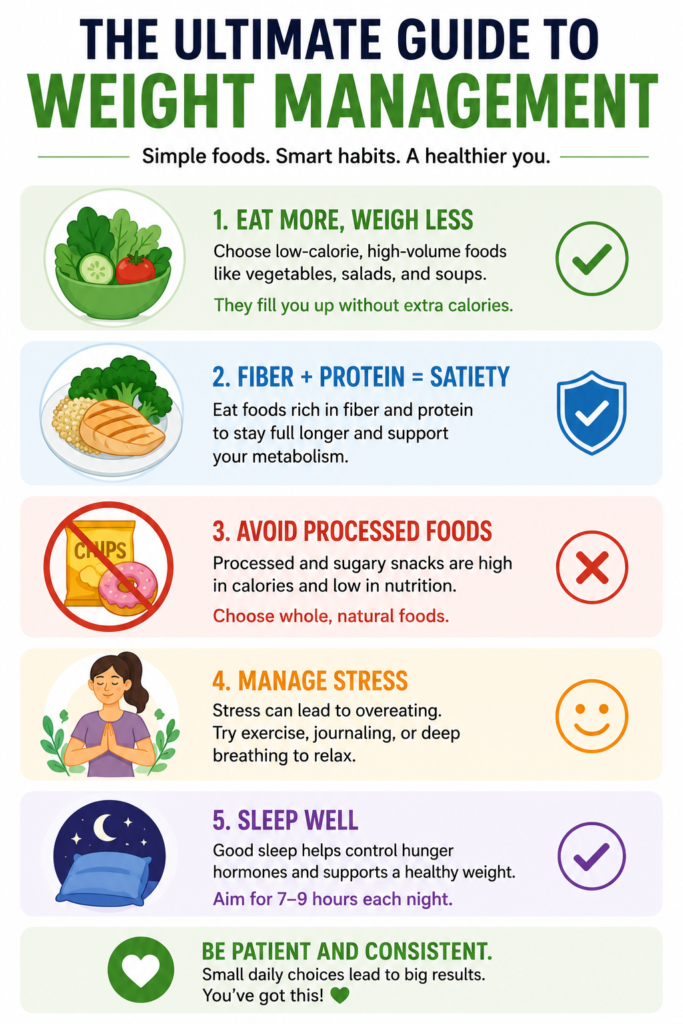
The Ultimate Guide to Weight Management
The Ultimate Guide to Weight Management: Foods, Strategies, and Lifestyle Tips for a Healthier You
Managing your weight can feel like a heavy weight on your shoulders sometimes, right? With countless diets, exercise plans, and health trends out there, it’s no wonder you might feel overwhelmed. But here’s the good news: you have all you need to succeed right in front of you. By focusing on the right foods, practicing mindful eating, and making smart lifestyle choices, you can find a balanced weight that works for you. Let’s dig into the science behind weight control, highlighting healthy foods and practical strategies that can enhance your overall well-being.
Understanding Weight Management and Its Challenges
When it comes to weight management, it’s not just about counting calories. It’s actually a lot about understanding nutrients, making educated food choices, and recognizing how things like stress and sleep can impact us. Many of us face issues like unintentional weight gain, often linked to unhealthy eating habits or emotional stress. By understanding the science behind our food choices and daily habits, we can change things in a way that leads to real, lasting results.
Low-Calorie, High-Volume Foods: Nature’s Weight Loss Allies
Choosing low-calorie, high-volume foods is a game-changer for weight management. Think about options like leafy greens, cucumbers, and broth-based soups. They’re not just light on calories but also packed with water, which means you can have larger portions without worrying too much about calorie intake.
Why Volume Matters
These foods can fill both your plate and your stomach without adding extra calories. Take a big salad with spinach, kale, and cucumbers. It’s satisfying and keeps hunger at bay. Research tells us that eating high-volume, low-calorie foods can lead to reduced calorie intake overall, helping you develop healthier eating habits and maintain your weight.
Actionable Tip: Make it a habit to include leafy greens and high-water vegetables in your meals. Try making a salad the star of your dinner or boost your soups and stews with veggies for volume without the extra calories.
The Role of Fiber and Protein in Weight Control
Let’s talk about two superheroes in weight management: fiber and protein. Foods loaded with these nutrients not only keep you feeling satisfied but also keep your metabolism humming along and help with digestion.
The Power of Fiber
High-fiber foods—like fruits, veggies, legumes, and whole grains—send signals to your brain that you’re full. Studies show that a fiber-rich diet can help lower body weight and support digestive health, ensuring that your body handles food efficiently.
Supporting Evidence: Research indicates that those who consume plenty of fiber are more likely to maintain a healthy weight compared to folks who don’t.
Protein for Satiety
Don’t forget about protein! Lean sources like chicken, fish, eggs, and Greek yogurt are fantastic choices. They have a high thermic effect, meaning your body burns more calories just digesting them compared to fats and carbs. So, you stay full longer and feel less tempted to snack.
Actionable Tip: Try to include a source of protein and fiber in every meal. For example, pair quinoa with roasted veggies and chicken to create a delicious, balanced meal.
The Dangers of Processed Foods and Sugary Snacks
Understanding what processed foods can do to your weight is crucial. These foods are often high in calories and low in nutritional value, which can lead to weight gain even if you think you’re not eating that much.
The Cycle of Cravings
Highly processed snacks are designed to taste really good, which often makes it easy to overeat. They can spike your blood sugar levels, only to crash and leave you craving more unhealthy snacks.
Supporting Evidence: According to a study, people who eat a lot of ultra-processed foods are 32% more likely to be obese than those who stick to whole foods. This shows just how important the quality of what we eat really is.
Actionable Tip: Swap out processed snacks for fresh options! Instead of chips or candy, grab some fruit, nuts, or even homemade popcorn.
Managing Stress to Help Maintain a Healthy Weight
Stress can have a significant effect on what we eat, leading to unintentional weight gain. Whether it’s emotional or chronic stress, many of us find ourselves reaching for comfort foods that are often sugary or fatty.
The Stress-Eating Link
When stress hits, it’s common to lean on unhealthy snacks as a coping mechanism. This not only complicates weight management but also affects our mental health.
Actionable Tip: Find healthier ways to handle stress! Consider activities like exercise, journaling, or mindfulness practices such as meditation. These can help reduce those emotional eating triggers.
The Essential Role of Sleep Quality
Getting enough sleep isn’t just about feeling rested; it’s a vital part of managing your weight. When you skimp on sleep, you may find yourself craving unhealthy foods and less motivated to stay active.
The Science of Sleep and Weight
Studies show that people who average less than seven hours of sleep a night tend to gain weight more easily. Hormonal changes that increase hunger and make you feel less full are partly to blame.
Actionable Tip: Aim for 7-9 hours of quality sleep each night. Create a soothing bedtime routine that includes limiting screen time and setting up a comfortable sleep space.
How to Apply This Information
So, how do you take this information and put it into practice? Here’s a simple guide to help you get started:
1. Meal Planning: Set aside time each week to plan meals that focus on low-calorie, high-volume foods, along with plenty of protein and fiber.
2. Mindful Eating: When you eat, take a moment to truly focus on your food. Enjoy each bite and pay attention to your body’s hunger signals.
3. Healthy Snack Alternatives: Stock up on snacks like fruits, veggies, and whole grains in your pantry and fridge to help curb cravings.
4. Monitor Sleep Patterns: Keep a sleep journal to track your habits and see where you can make improvements.
5. Stress Management Techniques: Try out different stress-reduction methods, like yoga or deep breathing exercises, to see what works best for you.
Conclusion
Managing your weight is about embracing a balanced approach through nutritious foods, mindful eating, effective stress management, and good sleep. By focusing on nutrient-rich foods and recognizing how different lifestyle factors play into our daily choices, you can pave your own path toward a healthier you.
Remember, it’s not about strict limits but about nourishing your body and mind. Start fitting these practical strategies into your routine today, and you’ll be well on your way to not just maintaining a healthy weight but also feeling great overall.
How do you feel about giving this a shot? I’d love to hear your thoughts in the comments, or if you’re curious for more insights, check out our other health-related articles!
Written by Alexander Babinets
Founder of Express Fitness • Certified Fitness Coach • Author
Helping people rebuild their health, mindset, and strength — without excuses, gimmicks, or fake motivation.
📍 expressfitness.ca
📩 info@expressfitness.ca
📘 My Books on Barnes & Noble → https://www.barnesandnoble.com/s/alexander%20babinets
📚 Мои книги на Литрес → https://www.litres.ru/search/?q=%D0%B0%D0%BB%D0%B5%D0%BA%D1%81%D0%B0%D0%BD%D0%B4%D1%80%20%D0%B1%D0%B0%D0%B1%D0%B8%D0%BD%D0%B5%D1%86
Hashtags: #weight #foods #about #stress #sleep #like #eating #management #high #fiber #just #calories #calorie #volume #protein