
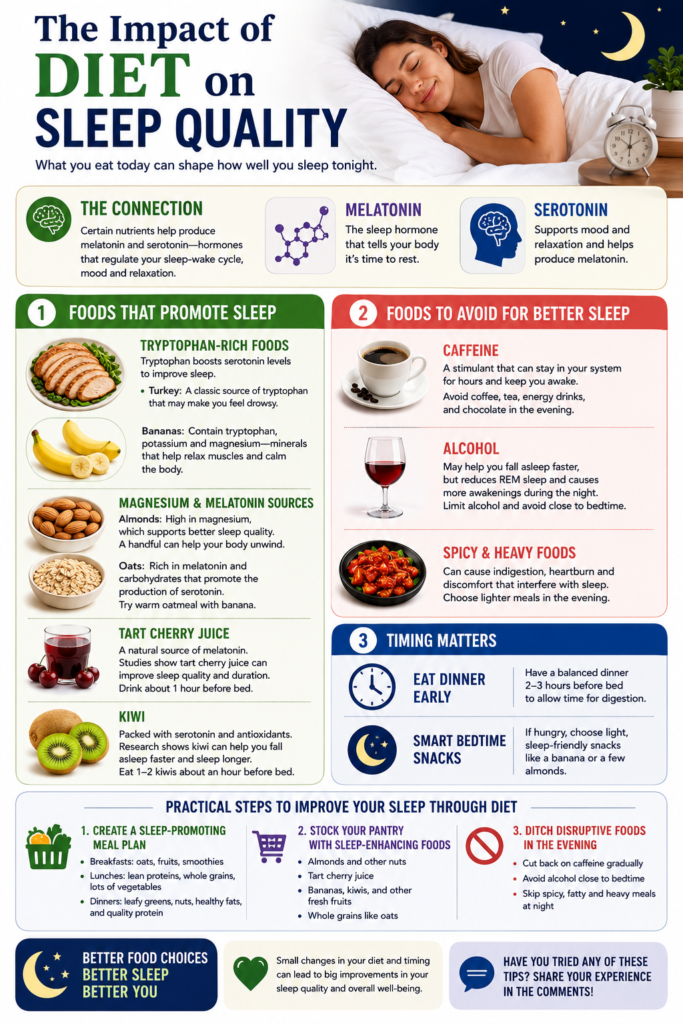
The Diet-Sleep Connection: Foods that Boost Sleep Quality
Introduction
Do you find yourself tossing and turning at night, feeling like a solid night’s sleep is just out of reach? You’re not alone—many of us struggle with restless nights. What you might not realize is that the food on your plate can significantly affect how well you sleep. There’s a real connection between what you eat and how deeply you rest; let’s explore how making mindful food choices can lead to better sleep. Ready to improve your nights? Let’s dig in!
Understanding the Impact of Diet on Sleep Quality
The Nutritional Link to Rest
Think of your body as an intricate machine that needs a variety of nutrients to work well, especially when it comes to catching those Zzz’s. Research shows that certain nutrients actually help your body produce melatonin, the hormone that tells you when it’s time to sleep. Nutrients like magnesium, serotonin, and tryptophan are key players in this process. By maintaining a balanced diet, you can smooth your way into sleep and enhance the quality of your rest.
But beware! Not all foods play nicely with your sleep. Studies indicate that sugary snacks and caffeinated drinks can keep you wide awake when you’re trying to doze off. So, making smart food choices is essential if you’re hoping to improve your sleep.
Foods That Promote Sleep
1. Tart Cherries
Let’s start with tart cherries—they’re little powerhouses of melatonin! Research indicates that drinking tart cherry juice can significantly boost both how long you sleep and how well you sleep, especially if you’re dealing with insomnia. Imagine a calming glass of tart cherry juice as part of your evening routine—it’s a simple way to nudge your body towards rest!
2. Bananas
These cheerful yellow fruits aren’t just a go-to snack; they’re also a fantastic sleep aid. Packed with magnesium and tryptophan, bananas can uplift your serotonin levels, which are crucial for regulating sleep. Grab one before bed or throw it into a smoothie for a delightful nighttime treat!
3. Kiwi
Small but mighty, kiwis are a game-changer for your sleep. Packed with serotonin and antioxidants, they can help you fall asleep faster and sleep more soundly. One study found that folks who enjoyed a kiwi each day for four weeks saw noticeable improvements in their sleep quality. Toss some kiwi into your evening snacks and see how it can work wonders for you!
4. Fatty Fish
Think of fatty fish, like salmon, as a wonderful ally in your sleep journey. Not only are they full of omega-3 fatty acids and vitamin D, but research suggests that including them in your meals can enhance sleep quality and increase how long you stay asleep. Aim for a couple of servings each week—you’ll appreciate the rewards during the night!
5. Almonds
Looking for a crunchy snack? Reach for a handful of almonds! They’re rich in magnesium, which is known to help with sleep. Studies suggest that upping your magnesium intake can lead to better sleep quality. Keep a little stash by your bedside for a quick, healthy bite before you hit the hay.
6. Oats
Not just comfort food, oats can also be a soothing addition to your bedtime routine. They contain melatonin and carbs that encourage insulin release, making it easier for your body to absorb tryptophan. Enjoy some oatmeal or overnight oats in the evening and let this cozy dish help you wind down.
7. Chamomile Tea
How about winding down with a cup of chamomile tea? This soothing drink has been loved for its calming properties for ages. Chamomile contains apigenin, an antioxidant that can make you feel sleepy by binding to receptors in your brain. Sip on a warm cup before bed and set the tone for a restful night!
Foods to Avoid Before Bed
The Sleep Sabotagers
It’s not only about what to eat but also what to steer clear of, especially as bedtime approaches. Here are some foods that could spoil your chances for a good night’s rest:
1. Simple Carbohydrates
Watch out for foods that are high in simple carbs, like sugary snacks or white bread. These can cause fluctuations in your blood sugar, leading to restless nights. It’s best to keep these treats to a minimum in the hours leading up to sleep.
2. Caffeine
Caffeine is a notorious wakefulness booster, and its effects can linger long after you’ve had your last sip. To ensure you’re not tossing and turning later, try to cut off caffeine at least two to three hours before bed.
3. Alcohol
You might think a drink before bed helps you unwind, but alcohol can really mess with your sleep cycle. It often leads to poorer sleep quality and more nighttime awakenings. Instead of a nightcap, consider herbal teas or warm milk to help you relax.
4. Spicy Foods
Spicy meals can excite your taste buds, but they might leave you feeling uncomfortable or with heartburn—especially if you suffer from GERD. To keep your sleep smooth, it’s a good idea to avoid these in the evening.
How to Apply This Information
Putting It All Together
Ready to take these tips to bed with you? Here’s how to make it happen:
1. Check Your Current Diet: Spend a week keeping track of what you eat, especially before bed, so you can see patterns.
2. Add Sleep-Friendly Foods: Start incorporating two to three sleep-promoting foods into your nightly meals or snacks.
3. Cut Out Sleep Disruptors: Slowly start reducing your intake of caffeine, alcohol, and sugary snacks before bedtime.
4. Build a Bedtime Routine: Combine your dietary changes with calming pre-sleep activities, like reading, meditating, or gentle stretches.
5. Talk to a Professional: If you have particular sleep issues or dietary concerns, consider reaching out to a healthcare provider for advice tailored to you.
Conclusion
In the end, what you eat has a big impact on how well you sleep. By consciously choosing foods that help promote peaceful slumber—like tart cherries, bananas, and almonds—and avoiding those that can disrupt it—like caffeine and sugar—you can make significant strides towards restful nights. Take a moment to reflect on what you’re eating and give these practical tips a try. A well-rested life really does enhance your overall well-being. So, how are you going to tweak your diet to improve your sleep? I’d love to hear your thoughts in the comments below—let’s chat about it!
By making mindful food choices, you’ll be well on your way to the restorative sleep you deserve. Sweet dreams!
Written by Alexander Babinets
Founder of Express Fitness • Certified Fitness Coach • Author
Helping people rebuild their health, mindset, and strength — without excuses, gimmicks, or fake motivation.
📍 expressfitness.ca
📩 info@expressfitness.ca
📘 My Books on Barnes & Noble → https://www.barnesandnoble.com/s/alexander%20babinets
📚 Мои книги на Литрес → https://www.litres.ru/search/?q=%D0%B0%D0%BB%D0%B5%D0%BA%D1%81%D0%B0%D0%BD%D0%B4%D1%80%20%D0%B1%D0%B0%D0%B1%D0%B8%D0%BD%D0%B5%D1%86
Hashtags: #sleep #foods #before #quality #like #what #well #they #help #these #diet #night #food #rest #especially