
The Surprising Connection Between Diet and Sleep Quality: Foods That Improve Your Rest
Do you ever toss and turn at night, wishing for just one good night’s sleep? You’re not alone. In our busy lives, restful sleep can feel like a rare treasure. While we often think about stress, screens, and schedules as culprits behind our sleepless nights, there’s another factor that deserves our attention: our diet. The truth is, what we eat can significantly influence our sleep quality. If a better night’s rest is on your wish list, let’s explore the foods that might help—and the ones you might want to skip.
The Role of Diet in Sleep Enhancement
Diet is more than just fuel for our bodies; it’s vital for our mental health, energy levels, and, crucially, our ability to sleep well. Some foods can lead to a peaceful night’s sleep, while others can keep you awake, staring at the ceiling. Here, we’ll look at some sleep-friendly foods, point out those that can disrupt your rest, and share practical tips to help you catch those Z’s.
1. Sleep-Enhancing Foods You Should Consider
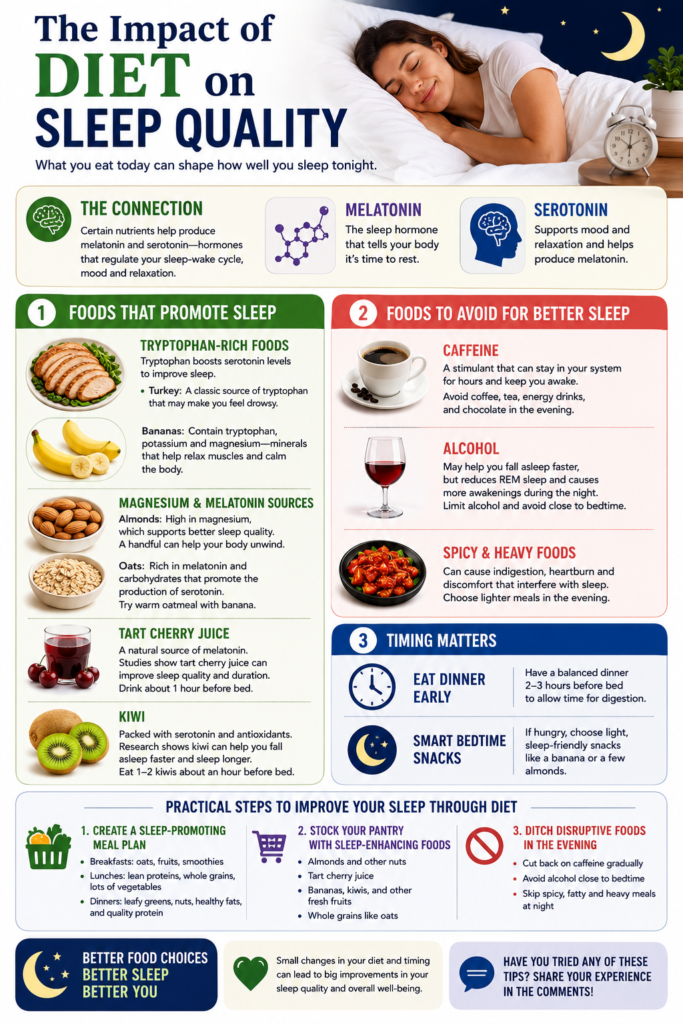
Montmorency Cherries: Nature’s Sleep Aid
Let’s kick things off with a superstar: Montmorency cherries. These tart little guys are loaded with melatonin, that magical hormone that tells your body when it’s time to snooze. Studies suggest that drinking tart cherry juice regularly can help you sleep longer and better. So, why not make it a nighttime ritual? Pour yourself a glass 30 minutes before bed and get ready to relax.
Bananas: The Sleep-Friendly Snack
If late-night snacking is your thing, look no further than bananas. These yellow fruits are not just tasty; they’re packed with nutrients like tryptophan, magnesium, and potassium—perfect for promoting relaxation and calming those racing thoughts. Tryptophan, in particular, gets converted into serotonin, which helps regulate your sleep.
– Quick Tip: Blend a banana into a smoothie with some almond milk for a satisfying bedtime treat, or enjoy it on its own for a quick snack.
Kiwis: Small but Mighty Sleep Assistants
Don’t underestimate the kiwi! These little fruits are tiny powerhouses when it comes to sleep. They contain serotonin and antioxidants that can help you both fall asleep faster and stay asleep longer. Research shows that munching on kiwis can improve your sleep efficiency and reduce those annoying night wakings.
– How to Use Kiwis: Toss some sliced kiwis in your morning cereal or savor them as a refreshing dessert after dinner.
2. Foods to Avoid for a Better Night’s Sleep
Now that we’ve highlighted some sleep enhancers, let’s flip the coin and talk about what to avoid, especially as bedtime approaches.
High Sugar Foods
Those sugary snacks might hit the spot, but they can also send your blood sugar on a roller coaster ride, leaving you wide awake at night. Try to cut back on the sweet stuff in the hours leading up to sleep.
Caffeine and Alcohol
Caffeine stays in your system for hours; we’re talking coffee, tea, chocolate, and even some medications. While a nightcap might seem relaxing, alcohol can mess with your sleep quality, causing interruptions in the all-important REM stage.
– Smart Choices: Swap out your usual beverage for some calming herbal teas like chamomile or valerian root as evening approaches.
Heavy and Spicy Foods
Spicy or heavy meals can lead to that uncomfortable feeling that makes sleep feel impossible. Keep your dinners light and easy to digest, especially as you wind down for the night.
3. The Science of Diet and Sleep Quality
Recent studies are backing up what many of us have suspected—there’s a strong link between what we eat and how well we sleep. Diets rich in omega-3 fatty acids and vitamin D (found in fish like salmon) have been associated with improved sleep patterns. Omega-3s may help reduce inflammation, which could be a culprit in sleep disturbances.
– Research Insight: One review noted that individuals who ate fatty fish at least three times a week reported better sleep quality.
How to Apply This Information
Ready to improve your sleep with diet? Here’s a simple game plan:
– Make room for sleep-promoting foods like those Montmorency cherries, bananas, kiwis, and fatty fish in your meals this week.
– Stick to a regular eating schedule and steer clear of large meals right before bedtime.
– Keep a food diary to track any changes you notice in your sleep quality based on your diet.
Conclusion
Understanding how your diet impacts your sleep gives you an opportunity to make some easy and beneficial changes. By incorporating foods like Montmorency cherries, bananas, and kiwis into your meals, and avoiding sugary and caffeinated items, you could find yourself sleeping more soundly in no time.
If you’ve been struggling with sleep lately, take a moment to check in with what you’ve been eating—it might just be the easiest fix you never knew you needed. So, what do you think? Ready to give it a shot? I’d love to hear your thoughts or any tips you have. Let’s support each other on the path to better sleep, one meal at a time!
Written by Alexander Babinets
Founder of Express Fitness • Certified Fitness Coach • Author
Helping people rebuild their health, mindset, and strength — without excuses, gimmicks, or fake motivation.
📍 expressfitness.ca
📩 info@expressfitness.ca
📘 My Books on Barnes & Noble → https://www.barnesandnoble.com/s/alexander%20babinets
📚 Мои книги на Литрес → https://www.litres.ru/search/?q=%D0%B0%D0%BB%D0%B5%D0%BA%D1%81%D0%B0%D0%BD%D0%B4%D1%80%20%D0%B1%D0%B0%D0%B1%D0%B8%D0%BD%D0%B5%D1%86
Hashtags: #sleep #foods #night #diet #some #quality #like #what #those #kiwis #better #might #help #just #montmorency