
What is Burnout?
Understanding and Overcoming Burnout: A Comprehensive Guide
Introduction
Ever find yourself feeling drained, detached, or just plain exhausted by everything life throws your way? You’re not alone. Burnout has become a buzzword lately, especially as we all grapple with increasing stress from work and everyday life. Let’s take a moment to break down what burnout really is, how it differs from depression, and some simple, effective ways to help you or someone close to you bounce back and regain that spark.
What is Burnout?
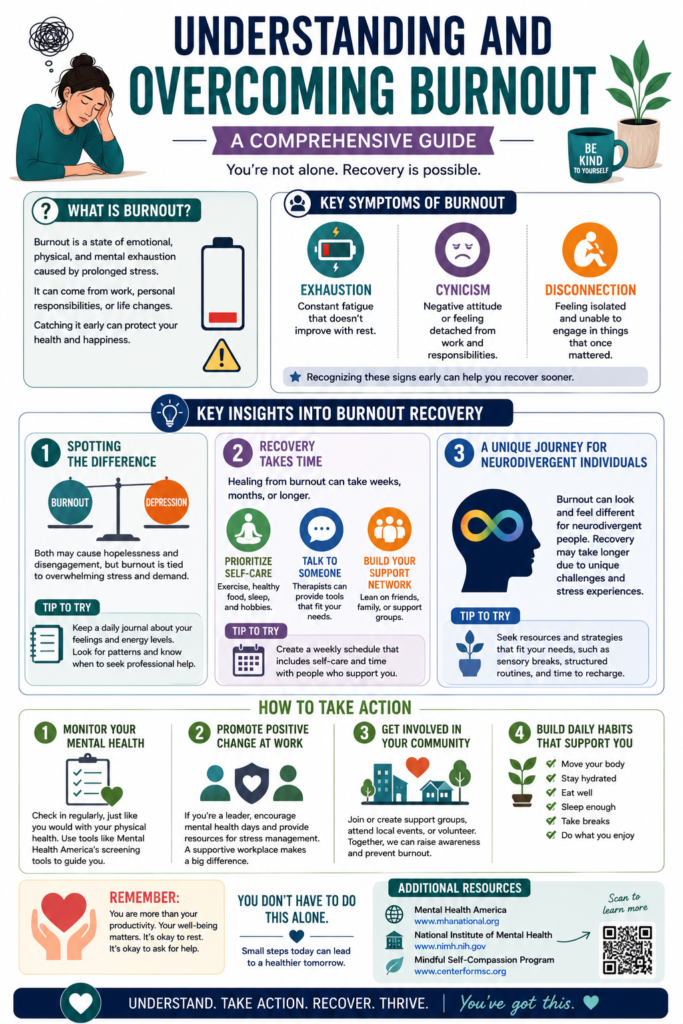
So, what exactly does burnout mean? Simply put, it’s a state of emotional, physical, and mental exhaustion. This often stems from going through a stretch of prolonged stress. While work can be a big source of that stress, personal responsibilities and other life changes can also weigh you down. The key is to catch those burnout feelings early—prolonged stress can take a toll on your overall health and happiness.
Key Symptoms of Burnout
Being able to identify the signs of burnout is crucial, especially since they can often get mixed up with symptoms of depression. Here are some telltale signs that you might be experiencing burnout:
– Exhaustion: That constant feeling of being tired, even if you’ve just had a full night’s sleep.
– Cynicism: A growing negative attitude or feeling disconnected from your work and daily responsibilities.
– Disconnection: An overwhelming sense of isolation; it feels like you can’t engage with the things that once mattered to you.
By recognizing these signs early on, you can take steps to recover more effectively.
Key Insights into Burnout Recovery
Insight 1: Spotting the Difference
It’s really important to know the difference between burnout and depression because they can share some similar symptoms but are quite different. While both conditions might bring on feelings of hopelessness and a lack of engagement, burnout is tied specifically to a feeling of overwhelming stress and demand. Understanding this distinction can be a game changer for your recovery.
Tip to Try: Keep a daily journal about your feelings and energy levels. This will help you spot patterns and figure out when it’s time to ask for professional help.
Insight 2: Recovery Takes Time
Getting through burnout isn’t just a quick fix; it might take weeks, months, or even longer depending on the person and their situation. Here are some practical strategies to help during the recovery process:
1. Prioritize Self-Care: Make sure you’re taking care of yourself with regular exercise, healthy meals, good sleep, and time for hobbies you love.
2. Talk to Someone: Consider reaching out to a therapist or counselor to gain coping tools that suit your individual needs.
3. Build Your Support Network: Surround yourself with friends and family or find a support group—having people to lean on can speed up your recovery.
Tip to Try: Try creating a weekly schedule that includes both self-care practices and quality time with others. This way, you reinforce your support system.
Insight 3: A Unique Journey for Neurodivergent Individuals
If you’re neurodivergent, you might notice that burnout can look and feel different for you. Research shows that neurodivergent folks often face unique challenges that can lengthen the recovery process. The way you interact with stressors can be vastly different, so it’s vital to find recovery strategies that resonate with your experience.
Tip to Try: If this sounds like you, seek out resources and techniques designed specifically for your needs, like sensory breaks or structured routines that allow for downtime when you need it.
How to Apply This Information
Recognizing burnout is one thing, but knowing how to manage it is another. Here are some actionable steps you can take:
1. Keep Tabs on Your Mental Health: Just like you would have regular physical check-ups, make sure to assess your mental health systematically. You can use tools like Mental Health America’s screening tools to guide you.
2. Promote Positive Change at Work: If you’re in a position of leadership, consider fostering a workplace that values mental health. Encourage mental health days and provide resources for stress management—creating a supportive environment can make a huge difference.
3. Get Involved in Your Community: Connect with local mental health initiatives. Whether it’s joining or creating a support group or workshop, raising awareness and preventing burnout together can build a stronger community.
Conclusion
Burnout is a growing concern, but having a solid grasp of its symptoms and pathways to recovery can empower you to take control of your mental health. By trying out effective self-care strategies and reaching out for help when you need it, you can make meaningful strides toward feeling better.
If you or someone you care about is facing burnout, remember: you’re not alone, and there are plenty of resources out there. Don’t hesitate to reach out—whether that’s through professional help or simply taking care of yourself a little better. Share this post with anyone who might need it, and let’s keep the conversation going about the importance of mental health.
For more insights, check out our blog for additional resources on managing stress and maintaining wellness in the workplace.
Additional Resources
– [Mental Health America Screening Tools](https://www.mhanational.org/)
– [National Institute of Mental Health](https://www.nimh.nih.gov/)
– [Mindful Self-Compassion Program](https://centerformsc.org/)
Together, by increasing our understanding of burnout and how to manage it, we can create a healthier, more supportive atmosphere for ourselves and everyone around us.
Written by Alexander Babinets
Founder of Express Fitness • Certified Fitness Coach • Author
Helping people rebuild their health, mindset, and strength — without excuses, gimmicks, or fake motivation.
📍 expressfitness.ca
📩 info@expressfitness.ca
📘 My Books on Barnes & Noble → https://www.barnesandnoble.com/s/alexander%20babinets
📚 Мои книги на Литрес → https://www.litres.ru/search/?q=%D0%B0%D0%BB%D0%B5%D0%BA%D1%81%D0%B0%D0%BD%D0%B4%D1%80%20%D0%B1%D0%B0%D0%B1%D0%B8%D0%BD%D0%B5%D1%86
Hashtags: #burnout #mental #health #recovery #stress #take #help #care #feeling #some #might #like #resources #yourself #just